


 English
 Español
 عربى
عربى

If your facility is still relying on traditional mops and manual cleaning methods, you're leaving significant efficiency gains on the table. Facility managers across warehouses, distribution centers, retail spaces, and commercial buildings face a constant challenge: maintaining pristine floors while managing labor costs and cleaning schedules. A commercial floor scrubber transforms this equation entirely. This comprehensive guide walks you through everything you need to know to make an informed purchasing decision, from understanding different machine types to calculating your return on investment and evaluating total cost of ownership.
What Is a Floor Scrubber and Why Do You Need One?
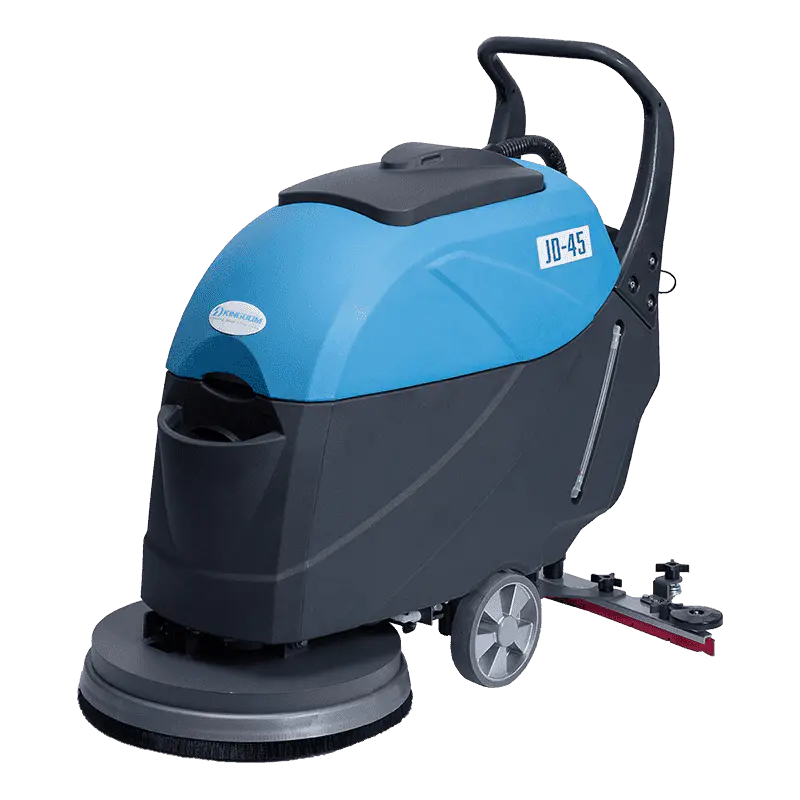
A floor scrubber is an industrial cleaning machine that combines rotating brush discs, water distribution systems, and suction recovery mechanisms to deep-clean hard surface floors in a single pass. Unlike traditional mopping, which relies on manual effort and inconsistent technique, a floor scrubber applies consistent pressure, cleaning solution, and water coverage across your entire facility systematically.
The efficiency difference is dramatic. A walk-behind floor scrubber can cover approximately 30,000 square feet per hour, which means it completes in 15 minutes what takes a crew member 60-90 minutes with a traditional mop. For a 10,000 square foot retail space, this translates to genuine 45-minute cleaning cycles instead of three-hour sessions. The cleaning quality is also superior—a floor scrubber removes embedded dirt, dried cleaning residue, and grime that surface mopping misses entirely.
Key Benefit: A mid-sized facility investing in a floor scrubber can reduce weekly labor hours by 8-12 hours while improving floor appearance and cleanliness standards.
Types of Floor Scrubbers: Which One Fits Your Facility?
Walk-Behind Floor Scrubbers
Walk-behind models are operator-guided machines that require an attendant to walk behind or alongside the equipment during operation. These units typically feature a 20-24 inch cleaning path and are powered by battery or cord systems.
Best for: Facilities under 15,000 square feet, spaces with narrow corridors or complex layouts, multi-story buildings, offices, retail locations, and environments requiring maneuverability around obstacles.
Advantages:
- Lower initial investment compared to ride-on models
- Superior maneuverability in tight spaces and around furniture
- Minimal training requirements for operators
- Easier storage in compact facilities
- Works effectively on stairs and ramps with proper technique
Ride-On Floor Scrubbers
Ride-on machines are designed with an operator seat, allowing staff to sit while controlling the equipment. These units typically feature wider cleaning paths (28-32 inches) and higher water tank capacities.
Best for: Large warehouses, distribution centers, airports, convention centers, manufacturing facilities, and spaces exceeding 20,000 square feet requiring extended daily operation.
Advantages:
- Covers large areas rapidly with cleaning paths up to 32 inches
- Reduced operator fatigue during multi-hour shifts
- Supports 24-hour facility operations and multiple daily cycles
- Higher water tank capacity reduces refill frequency
- Superior ergonomics for extended operational periods
Robotic and Autonomous Floor Scrubbers
Autonomous models represent the newest technology category, featuring pre-programmed cleaning paths, obstacle detection sensors, and minimal human intervention during operation.
Best for: Facilities seeking to eliminate operator dependency, facilities operating after-hours when staff is unavailable, environments where consistent cleaning quality is paramount, and operations aiming to redeploy labor to higher-value tasks.
Advantages:
- Operates independently without active operator supervision
- Eliminates human error and inconsistent cleaning patterns
- Enables off-hours or overnight cleaning without additional labor
- Generates data on cleaning cycles and facility conditions
- Reduces worker injury risk in hazardous environments
Key Specifications to Evaluate Before Buying
Power Source Comparison
Your machine's power source dramatically affects operational efficiency, maintenance requirements, and total cost of ownership. Here's how three primary options compare across critical dimensions:
| Battery Type | Charge Time | Runtime | Cycle Life | Maintenance |
|---|---|---|---|---|
| Lead Acid | 8 hours | 5 hours | 1,000-1,500 cycles | Water top-ups required |
| Lithium-Ion | 3-3.5 hours | 5 hours | 3,000+ cycles | Maintenance-free |
| Corded Electric | Unlimited | Unlimited | N/A | Cable management |
For Multi-Shift Operations: Lithium-ion batteries enable opportunity charging—quick 30-minute top-ups during lunch breaks restore sufficient charge for afternoon sessions. This flexibility ensures you maximize daily cleaning without purchasing multiple machines.
For Single-Shift or Budget-Constrained Facilities: Lead-acid batteries offer lower upfront costs, though higher maintenance requirements and shorter lifespan increase long-term expenses.
Cleaning Path Width
The cleaning path width directly correlates to coverage speed. A 32-inch ride-on machine covers space four times faster than a 20-inch walk-behind. Facilities exceeding 15,000 square feet benefit significantly from wider paths. Conversely, facilities with narrow corridors or complex layouts find walk-behind machines more practical despite slower coverage.
Tank Capacity
Clean water and waste water tank sizes determine how long your machine operates before requiring refills and emptying. A 40-gallon capacity supports 2-3 hours of continuous operation, while 20-gallon tanks require more frequent maintenance stops. Larger facilities benefit from maximum tank capacity to minimize operational interruptions.
Brush Pressure and Speed
Brush pressure (measured in PSI) and rotation speed (measured in RPM) determine cleaning effectiveness on different surface types. Concrete floors require higher pressure (50+ PSI) and faster speeds, while polished or delicate surfaces need lower pressure settings. Ensure your machine offers adjustable settings to accommodate your facility's floor types.
Cost Considerations: Factory-Direct vs. Dealer Pricing
Equipment pricing varies significantly depending on your purchasing channel. Understanding these differences empowers you to negotiate effectively and optimize your capital expenditure.
Factory-Direct Model: Manufacturers selling directly to end-users eliminate regional distributor markups (typically 20-30%), showroom costs, and sales commissions. This channel reduction translates directly to customer savings of 30-50% compared to dealer pricing for equivalent equipment specifications.
Comparable Price Comparison Example:
An identically-equipped walk-behind floor scrubber with equivalent specifications, warranty, and support might cost USD 6,500-8,000 through traditional retail dealers, while the same machine purchased direct from manufacturers typically ranges USD 2,200-3,300. This pricing gap reflects channel economics rather than quality differences.
Additional Cost Factors:
- Volume discounts for purchasing multiple units
- Extended warranty options
- Training and operator certification programs
- Spare parts and brush inventory packages
- Installation and setup services
- Transportation and delivery fees
ROI Calculation: How a Floor Scrubber Pays for Itself
Real-World Scenario Analysis
Consider a 20,000 square foot warehouse requiring nightly floor maintenance. Currently, two staff members clean the facility using traditional mopping methods, requiring 3 hours each night (6 labor hours total).
Current Labor Cost: 6 hours × USD 18/hour × 250 working days annually = USD 27,000 annually
With Floor Scrubber: One machine operates 45 minutes nightly (1 staff member required) = 1.5 labor hours daily
New Annual Labor Cost: 1.5 hours × USD 18/hour × 250 days = USD 6,750 annually
Annual Savings: USD 27,000 - USD 6,750 = USD 20,250
If the equipment investment is USD 3,500, the machine achieves full payback in approximately 2.1 months of operation. Over a typical 5-7 year equipment lifespan, total labor savings exceed USD 100,000.
Additional ROI Factors
Quality Improvements: Superior floor condition extends surface lifespan, delaying expensive refinishing or replacement projects by 2-3 years. This represents USD 5,000-15,000 in deferred capital expenses.
Productivity Gains: Faster cleaning cycles enable your team to redirect effort toward other facility maintenance tasks, improving overall operational efficiency.
Reduced Worker Compensation Claims: Eliminating repetitive manual mopping reduces musculoskeletal injuries and associated worker compensation expenses.
Liability Reduction: Professional-grade cleaning reduces slip-and-fall incidents, lowering insurance claims and potential liability exposure.
Essential Maintenance Tips to Extend Machine Life
Proper maintenance directly extends your equipment's operational lifespan and prevents costly repairs. Following systematic care protocols transforms your floor scrubber into a 7-10 year asset rather than a 3-4 year liability.
Daily Maintenance Checklist
Complete these tasks immediately after each cleaning cycle:
- Empty waste water tank completely—never leave waste water in tanks overnight, as stagnant water promotes bacterial growth and corrosion
- Rinse clean water tank and refill with fresh water to prevent cleaning agent residue buildup
- Inspect squeegee blades for streaking or incomplete water recovery—flip or replace worn blades immediately
- Check brush heads for wrapped wire, hair, or embedded debris that reduces cleaning effectiveness
- Verify battery charge level and plug in charger if needed for next cycle
- Wipe down exterior surfaces to prevent corrosion
Weekly and Monthly Maintenance
- Test battery voltage and terminal connections for corrosion or loose contacts
- Inspect and clean intake filters to maintain optimal suction power
- Check motor amperage draw to detect developing bearing issues early
- Lubricate pivot points and moving components per manufacturer specifications
- Review operational logs for unusual vibration, noise, or performance changes
Quarterly Maintenance
- Perform complete brush head replacement if bristles show significant wear
- Inspect solution hoses for cracks or mineral deposits restricting flow
- Calibrate water distribution systems to ensure even coverage across the cleaning path
- Replace worn squeegee blade assemblies entirely rather than attempting temporary repairs
Used vs. New Floor Scrubbers: What to Know
Budget constraints may make used equipment attractive, but informed purchasing requires understanding critical inspection points and long-term cost implications.
Essential Inspection Criteria for Used Machines
Battery Condition: Battery health represents the most critical evaluation factor for used machines. Request detailed battery test results showing voltage output under load, charge retention after 24 hours, and estimated remaining cycle life. A degraded battery requiring replacement within 6-12 months represents USD 1,500-3,000 in unexpected expenses, potentially negating initial purchase savings.
Operating Hours and Service History: Machines with documented service records indicating regular maintenance are preferable to unknown-history equipment. High-usage hours (5,000+ annually) suggest accelerated component wear, potentially requiring imminent replacement of brushes, squeegees, and seals.
Brush and Squeegee Wear Assessment: Severely worn brushes (less than 1 inch bristle remaining) require immediate replacement, adding USD 200-500 to acquisition costs. Damaged squeegee blades cannot be repaired and require full assembly replacement.
Frame and Structure Integrity: Examine the frame for rust, corrosion, cracks, or impact damage. Rust indicates prior water damage or exposure to harsh environments. Structural damage affects machine stability and safe operation.
Component Availability and Brand Selection: Equipment from established manufacturers ensures spare parts availability through multiple channels. Lesser-known brands may face parts sourcing challenges, resulting in extended downtime and service delays.
Cost-Benefit Analysis for Used Equipment
Used machines typically cost 40-60% less than new equipment. However, if repairs exceed 25-30% of the purchase price within the first year, you've eliminated the financial advantage. When used equipment requires battery replacement (USD 2,000-3,000) plus other repairs, total acquisition cost approaches or exceeds new machine pricing while offering significantly shorter remaining lifespan.
Frequently Asked Questions About Floor Scrubbers
Q1: What is the average lifespan of a commercial floor scrubber?
With proper maintenance and regular servicing, commercial floor scrubbers typically operate effectively for 5-10 years. Machines used in single-shift operations last longer than those running continuous, multi-shift cycles. Battery replacement (occurring every 3-5 years with lead-acid, or 5-7 years with lithium-ion) often represents the most significant maintenance expense during a machine's operational life.
Q2: Can floor scrubbers be used on all floor types?
Floor scrubbers work optimally on hard surfaces including concrete, tile, vinyl, sealed wood, and polished stone. They are not suitable for unsealed wood floors, carpet, or gravel surfaces. Different floor types require specific brush configurations and pressure settings—vinyl floors need softer brushes at lower pressure, while warehouse concrete can tolerate harder brushes and higher pressure for aggressive cleaning.
Q3: What's the difference between a floor scrubber and a floor sweeper?
A floor sweeper uses rotating brushes to collect dry debris into a collection hopper, effectively removing dust, dirt, and small particles. A floor scrubber combines brush action with water distribution and cleaning solution, then recovers dirty water through vacuum suction. Scrubbers deliver superior cleaning for wet soil, dried residues, and embedded dirt, while sweepers excel at removing loose debris. Many facilities use both machines in complementary cleaning programs.
Q4: How often should squeegee blades be replaced?
Squeegee blade lifespan depends on floor type, cleaning intensity, and debris volume. In typical commercial applications, quality squeegee blades last 2-4 months before showing signs of reduced water recovery efficiency. Indications for replacement include visible water streaks on cleaned floors, incomplete waste water removal, or water pooling at the rear of the machine. Regular inspection—flipping blades before replacement to extend active life—reduces replacement frequency.
Q5: Do I need special training to operate a ride-on floor scrubber?
While ride-on machines don't require formal certification in most jurisdictions, operator training significantly improves equipment care and cleaning results. Comprehensive training covers battery charging protocols, proper brush pressure adjustment for different surfaces, tank maintenance procedures, and troubleshooting common operational issues. Investing 2-4 hours in initial training prevents costly mistakes and extends machine lifespan dramatically.
Q6: What cleaning solution should I use in my floor scrubber?
Use only cleaning solutions formulated specifically for floor scrubbers. All-purpose household cleaners create excessive foam, clogging solution filters and reducing effectiveness. Solution concentrations matter—overly diluted mixtures provide insufficient cleaning power, while concentrated solutions damage seals and create sticky residues. Follow manufacturer recommendations regarding solution type and dilution ratios for optimal results.
Q7: How do I transition my facility from manual mopping to floor scrubber cleaning?
Transition gradually by introducing the floor scrubber during off-peak hours initially, allowing operators to build proficiency before full facility implementation. Adjust machine settings to match existing cleanliness standards—if current manual cleaning produces acceptable results, fine-tune the scrubber's brush pressure and solution concentration to replicate those outcomes. Monitor floor appearance during the transition period and gather staff feedback to optimize equipment settings.
Get a Quote for Your Floor Scrubber Today
Making the right equipment choice requires professional guidance tailored to your facility's unique requirements. Our team specializes in matching facilities with appropriate cleaning solutions, considering your square footage, floor types, operational schedule, and budget parameters.
What We Provide:
- Detailed facility assessment and cleaning needs analysis
- Equipment recommendations based on your specific requirements
- Transparent pricing with no hidden charges or dealer markups
- Operator training and comprehensive support materials
- Ongoing technical support and parts availability
Request a personalized quote today and discover how investing in proper equipment reduces labor costs, improves cleaning quality, and enhances your facility's appearance. Our facility cleaning specialists are ready to discuss your floor scrubber needs and identify solutions that deliver measurable return on investment for your organization.
