

 English
 Español
 عربى
عربى

Drastic Time & Cost Reduction
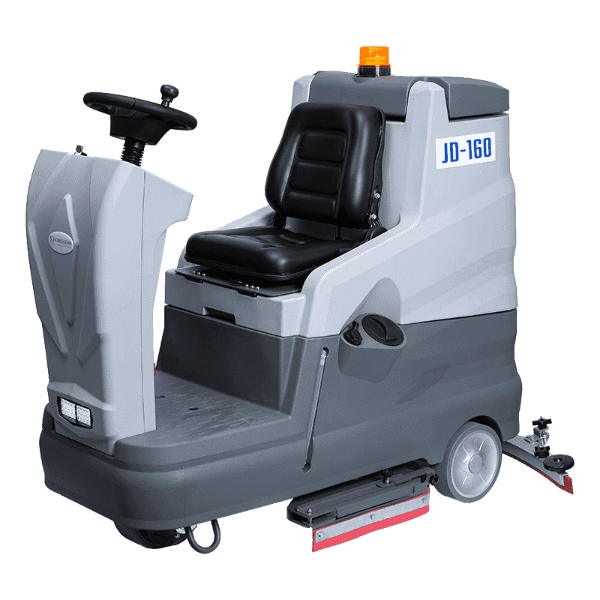
A ride-on floor scrubber improves cleaning efficiency in large spaces by increasing cleaning speed up to 8-10 times compared to manual mopping or walk-behind scrubbers, while delivering superior water recovery and consistent results. For a 50,000 sq. ft. warehouse, a ride-on scrubber can complete the job in under 2 hours instead of a full 8-hour shift.
Productivity Metrics: Speed vs. Manual Methods
The core advantage lies in coverage rate. A typical ride-on scrubber operates at 25,000–40,000 sq. ft. per hour, compared to 5,000–10,000 sq. ft. for a walk-behind model and only 2,000 sq. ft. for manual mopping.
- Ride-on scrubber: 30,000 sq. ft./hour – Ideal for warehouses, airports, and shopping malls.
- Walk-behind scrubber: ~8,000 sq. ft./hour – Suitable for medium retail spaces.
- Mop & bucket: ~2,000 sq. ft./hour – Only feasible for small areas (<5,000 sq. ft.).
This means for a 100,000 sq. ft. facility, switching from walk-behind to ride-on saves over 10 labor hours weekly.
Key Design Features That Drive Efficiency
Ride-on scrubbers are engineered for continuous, high-output cleaning. Below are the critical components and their impact on large-space maintenance.
1. Wider Scrubbing Paths (30–45 inches)
Compared to walk-behind units (17–26 inches), a ride-on scrubber covers 50–100% more area per pass, reducing the number of overlapping passes needed.
2. Larger Solution & Recovery Tanks
Tank capacities range from 30 to 150 gallons. A 50-gallon tank allows 90–120 minutes of continuous scrubbing before refilling—critical for spaces like convention centers where emptying and refilling multiple times would disrupt operations.
3. High-Pressure Scrubbing & Powerful Suction
Brush pressure (typically 200–400 lbs) and suction motors (500–1,000 watts) remove embedded dirt in one pass, eliminating the need for pre-sweeping or re-scrubbing. In tests, a ride-on scrubber removed 98% of floor debris in a single pass versus 80% for a walk-behind unit.
Data-Driven Comparison: Ride-On vs. Alternatives
The table below summarizes efficiency metrics for a typical 60,000 sq. ft. retail space cleaned daily.
| Method | Time (hrs) | Labor Cost* | Water Used (gal) | Drying Time |
|---|---|---|---|---|
| Manual Mop | 8.0 | $160 | ~120 | 60–90 min |
| Walk-behind Scrubber | 2.5 | $50 | ~30 | 20–30 min |
| Ride-on Scrubber | 1.0 | $20 | ~15 | 5–10 min |
*Based on $20/hour labor rate. The ride-on scrubber reduces labor cost by 87.5% compared to manual mopping and 60% compared to walk-behind.
Practical Considerations for Large Spaces
While speed and capacity are vital, real-world efficiency also depends on these operational factors:
- Aisle width & turning radius: Most ride-on scrubbers have a turning radius of 40–60 inches. For narrow aisles (under 48 inches), a walk-behind may still be needed for edge cleaning—though many ride-ons now include side brushes.
- Floor condition: Rough or heavily pitted concrete reduces water recovery efficiency. Use a ride-on with heavy-duty squeegees and increased down pressure (e.g., 350+ lbs).
- Battery runtime: Lithium-ion models offer 4–6 hours of continuous run time and opportunity charging during breaks, eliminating downtime for battery changes.
For spaces larger than 40,000 sq. ft., a ride-on scrubber becomes the most cost-effective choice within 3–6 months due to labor savings alone, without factoring in improved hygiene or reduced slip hazards.
Conclusion: Why Ride-On Scrubbers Dominate High-Traffic Areas
In large environments like distribution centers, schools, or airports, a ride-on floor scrubber improves cleaning efficiency by reducing labor hours by 70–90%, cutting water usage by more than half, and enabling one operator to clean what would otherwise require a crew of three. The combination of wider scrub decks, larger tanks, and powerful suction ensures that one machine replaces multiple manual steps, delivering consistent, dry floors faster than any alternative method.