

 English
 Español
 عربى
عربى

Maintaining clean floors is a crucial part of any commercial or industrial facility. A well-maintained floor not only enhances the overall appearance of the space but also contributes to a safer and more hygienic environment. For businesses that deal with high traffic, dirt, or industrial work environments, choosing the right cleaning equipment is essential. One of the most effective tools for floor cleaning is the commercial floor scrubber.
Introduction to Commercial Floor Scrubbers
A commercial floor scrubber is a motorized cleaning machine designed to clean large areas of flooring efficiently. Unlike traditional manual cleaning methods, these machines offer higher productivity, reduce labor costs, and provide a deeper clean. The scrubbers use water, cleaning solution, and scrubbing brushes to clean floors, and they typically include a squeegee that vacuums up the dirty water to leave the floor dry.
There are several types of commercial floor scrubbers, each suited to different environments and flooring types. These machines range from walk-behind models for smaller spaces to larger ride-on machines designed for expansive areas. Depending on the type of flooring, businesses may choose from a variety of floor scrubber dryers, ensuring optimal performance and floor care.
Key Factors to Consider When Choosing a Commercial Floor Scrubber
When selecting a floor scrubber, several factors should be considered:
- Type of Flooring: Different floors have unique cleaning needs. For example, a hard concrete floor may require a different scrubber than a delicate marble floor.
- Area Size: Larger spaces require machines that can cover more ground, while smaller areas may benefit from compact models.
- Wet vs. Dry Cleaning: Some machines are designed to dry the floor quickly after cleaning, while others are primarily for wet cleaning.
- Type of Dirt and Stains: Certain scrubbers may be more effective at handling oil spills, industrial grime, or dust.
- Power Source: Some commercial floor scrubbers are battery-powered, while others run on electricity. The choice depends on your facility’s power access and needs.
Types of Commercial Floor Scrubbers
Walk-Behind Scrubbers
Walk-behind scrubbers are ideal for smaller commercial spaces, such as offices, retail environments, and healthcare facilities. These scrubbers are compact, easy to maneuver, and designed for use in narrow aisles and tight spaces. They are typically best suited for cleaning hard floors like tile, vinyl, and concrete.
Features:
- Suitable for smaller spaces (under 10,000 square feet).
- Versatile, can clean a variety of hard floors.
- Ideal for light to moderate cleaning.
Pros:
- Easy to operate.
- Affordable and cost-effective.
- Great for regular maintenance.
Cons:
- Limited cleaning capacity compared to ride-on models.
- May require more manual labor for larger spaces.
Ride-On Scrubbers
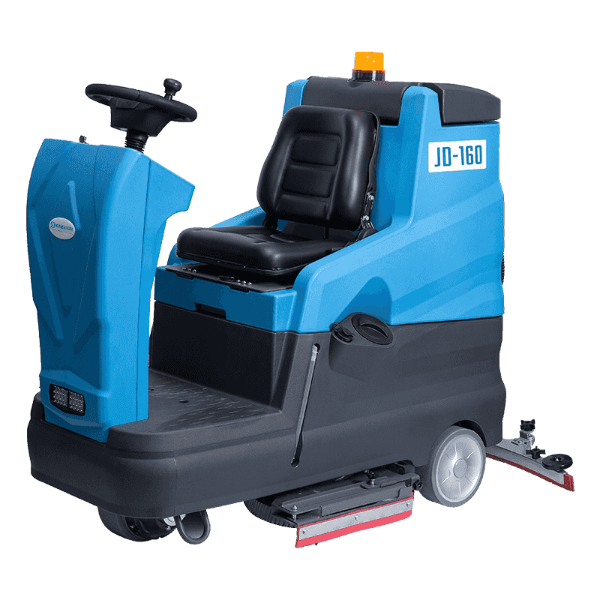
Ride-on scrubbers are designed for larger commercial and industrial spaces. These machines are ideal for cleaning areas such as warehouses, airports, shopping malls, and factories. Since they are ride-on, operators can cover vast areas without exerting as much physical effort.
Features:
- Suitable for large areas (over 10,000 square feet).
- Faster cleaning speeds.
- More powerful cleaning solution application.
Pros:
- Increased productivity.
- Can handle more heavy-duty cleaning tasks.
- Less operator fatigue due to seated design.
Cons:
- Larger machines, requiring more storage space.
- More expensive compared to walk-behind models.
Stand-On Scrubbers
Stand-on scrubbers are a hybrid of walk-behind and ride-on models. They offer the speed and power of a ride-on scrubber but with a more compact and maneuverable design. These scrubbers are often used in medium to large commercial areas like office buildings, retail spaces, and schools.
Features:
- More compact than ride-on models.
- Suitable for medium-sized areas (5,000 to 15,000 square feet).
- Provides better visibility in crowded areas.
Pros:
- Combines the benefits of both walk-behind and ride-on scrubbers.
- Efficient cleaning for medium-sized areas.
- Faster than traditional walk-behind scrubbers.
Cons:
- Requires more operator involvement than ride-on models.
- Less suitable for very large spaces.
Automatic Scrubbers
Automatic floor scrubbers are advanced machines that offer hands-free operation. These scrubbers use sensors to detect areas that need cleaning and automatically adjust the water and cleaning solution flow. These machines are best suited for large spaces, such as airports, convention centers, and warehouses.
Features:
- Fully automated operation.
- Suitable for large-scale commercial spaces.
- Can be programmed for routine cleaning tasks.
Pros:
- Requires minimal human intervention.
- Ideal for large, high-traffic areas.
- Increases cleaning consistency.
Cons:
- High upfront cost.
- More complex to maintain.
Floor Scrubber Dryers: Enhancing Efficiency
Floor scrubber dryers are essential tools for ensuring floors are clean and dry immediately after cleaning. These machines include a drying mechanism that vacuums up the cleaning solution, ensuring that the floor is not left wet or slippery. Scrubber dryers are vital for areas where safety is a priority, such as hospitals, kitchens, and warehouses.
The drying process is especially important in facilities with high foot traffic, as wet floors can be hazardous and increase the risk of accidents.
Choosing the Right Scrubber for Different Types of Flooring
The type of floor scrubber you choose largely depends on the type of flooring in your commercial space. Below is a breakdown of the most common flooring types and the scrubbers best suited for each:
| Floor Type | Best Floor Scrubber Type | Features |
|---|---|---|
| Concrete | Ride-On Scrubber, Walk-Behind Scrubber | Concrete floors are tough and durable but can accumulate heavy dirt and stains. Scrubbers with high-pressure brushes and squeegees are ideal for cleaning. |
| Tile | Walk-Behind Scrubber | Tile floors require gentle cleaning to avoid grout damage. A walk-behind scrubber with soft brushes is perfect for tile floors. |
| Vinyl | Stand-On Scrubber, Walk-Behind Scrubber | Vinyl floors are susceptible to scratching, so scrubbers with adjustable pressure settings are ideal. |
| Wood | Walk-Behind Scrubber, Stand-On Scrubber | Wood floors require careful attention, and scrubbers with non-abrasive pads are best to avoid surface damage. |
| Marble | Walk-Behind Scrubber | For polished surfaces like marble, a scrubber with a soft brush and a gentle cleaning solution is best to prevent damage. |
Conclusion: Maximizing the Efficiency of Your Commercial Floor Scrubber
Selecting the right commercial floor scrubber for your specific needs is vital to maintaining a clean and safe environment. By carefully evaluating the floor type, size of the space, and cleaning requirements, you can ensure that you invest in the right equipment.
Whether you need a simple walk-behind model for a small retail space or a high-powered ride-on scrubber for a large warehouse, there are options available that will help you achieve an efficient, consistent clean. Always work with reliable floor scrubber dryer suppliers to ensure that you receive the best quality equipment and support.
FAQ
1. What is the difference between a walk-behind scrubber and a ride-on scrubber?
A walk-behind scrubber is manually operated and is ideal for small to medium-sized spaces. In contrast, a ride-on scrubber is designed for larger spaces and allows the operator to sit while cleaning, offering greater speed and productivity.
2. Can a floor scrubber be used on all types of flooring?
Yes, but the type of scrubber and brush pads used should be adjusted based on the flooring material. For example, a soft pad should be used for delicate surfaces like wood or marble.
3. How often should a commercial floor scrubber be maintained?
Regular maintenance, including cleaning brushes and replacing worn-out parts, is crucial. It is recommended to check the machine after each use for minor repairs and perform a more thorough maintenance routine every 3-6 months.
4. Are automatic scrubbers worth the investment for smaller businesses?
While automatic scrubbers are more expensive, they can significantly increase cleaning efficiency in large, high-traffic areas. For smaller businesses, a walk-behind scrubber may offer a more cost-effective solution.
5. How can I extend the lifespan of my floor scrubber?
Regular maintenance, such as cleaning the water tank, replacing brush pads, and checking for leaks, can extend the lifespan of a floor scrubber. Ensure that the machine is also used according to the manufacturer’s guidelines for optimal performance.