

 English
 Español
 عربى
عربى

Introduction: The Evolution of Floor Cleaning
In commercial and industrial settings, maintaining cleanliness is a top priority. Over the years, the methods of floor cleaning have evolved, moving from traditional mopping to more advanced equipment like commercial floor scrubbers. These modern machines promise enhanced efficiency and productivity.
The Traditional Mopping Method: A Familiar Approach
Mopping has been the standard method for floor cleaning in residential and commercial spaces for decades. It involves the use of a mop and bucket, where cleaning solution is applied manually and dirt is wiped away. While mopping is effective for small areas, its performance can be less than optimal when it comes to large-scale cleaning.
Limitations of Traditional Mopping:
Time Consumption: Mopping can take a significant amount of time, especially in large facilities.
Inconsistent Cleaning: The effectiveness of mopping depends largely on the operator’s technique and the condition of the mop.
Labor Intensity: It requires continuous manual effort, often resulting in operator fatigue.
Water Usage: Traditional mopping can leave excessive water on the floor, leading to longer drying times and potential slip hazards.
Enter the Commercial Floor Scrubber
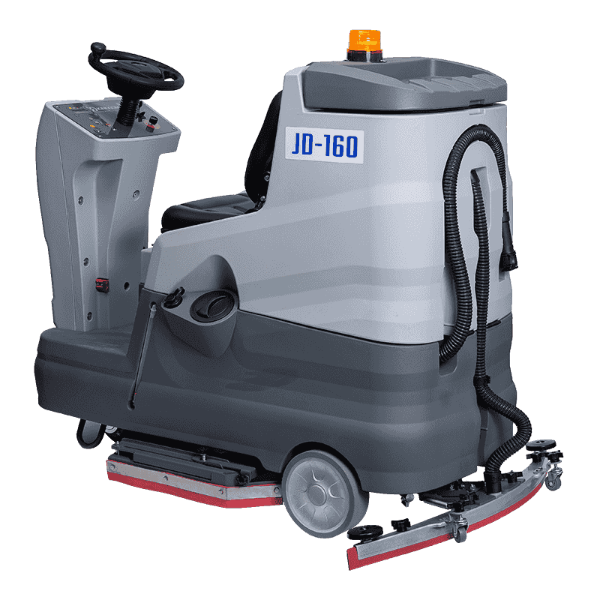
Commercial floor scrubbers have gained popularity as a superior alternative to traditional mopping, especially in larger facilities such as warehouses, shopping centers, and hospitals. These machines are designed to scrub, clean, and dry the floor in one pass, offering a higher level of efficiency and cleanliness.
Key Features of Commercial Floor Scrubbers:
Efficient Scrubbing: Equipped with rotating brushes, these machines scrub floors more effectively than mops, removing embedded dirt and stains.
Drying Function: Most commercial floor scrubbers include a drying feature, which reduces the risk of slip-and-fall accidents associated with wet floors.
Automation: Modern floor scrubbers are often semi-automatic or fully automatic, minimizing the need for manual labor.
Versatility: These machines can be used on a variety of surfaces, including tile, concrete, and hardwood, offering a wide range of applications in various commercial environments.
Comparing Performance: Commercial Floor Scrubber vs. Traditional Mopping
To better understand the differences between commercial floor scrubbers and traditional mopping, let’s break down the comparison into several key performance areas:
Cleaning Speed
One of the most significant advantages of a commercial floor scrubber over traditional mopping is the cleaning speed. A floor scrubber can cover much more area in a shorter amount of time, reducing cleaning downtime and improving productivity.
| Feature | Commercial Floor Scrubber | Traditional Mopping |
|---|---|---|
| Cleaning Speed | Faster, covers larger areas | Slower, smaller areas |
| Coverage per Hour (Square Feet) | 10,000 - 20,000 sq. ft. | 1,000 - 2,000 sq. ft. |
| Downtime (Drying Time) | Minimal, floors dry quickly | Significant drying time |
Effectiveness
Commercial floor scrubbers tend to clean floors more effectively than mopping. Their rotating brushes and high-pressure water jets ensure a deeper clean, removing dirt and grime that traditional mops may leave behind.
| Cleaning Effectiveness | Commercial Floor Scrubber | Traditional Mopping |
|---|---|---|
| Dirt Removal | Deep clean, more thorough | Surface level clean |
| Stain Removal | More effective | Less effective |
| Surface Condition | Uniform, smooth finish | Variable results |
Labor and Cost Efficiency
While commercial floor scrubbers may have a higher upfront cost, their efficiency and reduction in labor costs can make them more economical in the long run. Less manual labor means fewer workers are needed, reducing operational costs.
| Labor Efficiency | Commercial Floor Scrubber | Traditional Mopping |
|---|---|---|
| Manual Labor | Minimal, often automated | High, requires constant manual effort |
| Operational Costs | Reduced (long-term) | High (frequent labor required) |
| Maintenance | Low maintenance, durable | Regular mop replacement needed |
Safety and Drying Time
Safety is a critical concern in commercial spaces, particularly when floors are wet. Commercial floor scrubbers reduce drying time and offer an integrated drying mechanism, significantly lowering the risk of slips and falls. In contrast, traditional mopping leaves floors wet for a longer period, increasing the risk of accidents.
| Safety Feature | Commercial Floor Scrubber | Traditional Mopping |
|---|---|---|
| Drying Time | Quick, minimal drying time | Long drying time |
| Slip Hazard | Lower risk due to quick drying | Higher risk due to wet floors |
Additional Considerations: Environmental Impact and Maintenance
Environmental Impact
Floor scrubbers use water and cleaning solutions more efficiently than traditional mopping. Their automated systems control water usage, ensuring that water is applied only where necessary. Traditional mopping, on the other hand, often wastes water and cleaning solutions.
Maintenance
While commercial floor scrubbers require periodic maintenance, such as replacing brushes and checking battery levels, they are generally built to last longer than mops. Traditional mops need to be replaced regularly, adding to long-term costs.
FAQ
1. How often should a commercial floor scrubber be used?
Commercial floor scrubbers are designed for regular use, especially in large facilities with high traffic. Depending on the facility size and foot traffic, daily or weekly use may be necessary.
2. Can a floor scrubber be used on all types of flooring?
Most commercial floor scrubbers are versatile and can be used on various flooring surfaces, including tile, vinyl, concrete, and hardwood. However, always check the manufacturer’s recommendations for specific flooring types.
3. What are the key benefits of using a floor scrubber over traditional mopping?
The main benefits include faster cleaning times, better dirt and stain removal, lower labor costs, and improved safety due to faster drying times.
4. Are commercial floor scrubbers environmentally friendly?
Yes, commercial floor scrubbers are designed to minimize water and cleaning solution usage, making them more environmentally friendly than traditional mopping methods.
5. How long does a commercial floor scrubber last?
With proper maintenance, a commercial floor scrubber can last for several years, making it a long-term investment for large commercial spaces.
Conclusion
In conclusion, commercial floor scrubbers provide superior performance compared to traditional mopping methods, particularly in terms of speed, effectiveness, and safety. While the initial cost of a floor scrubber may be higher, the long-term benefits in labor efficiency and operational costs make it an excellent investment for businesses and industries requiring large-scale cleaning solutions. By reducing downtime and providing a deeper clean, floor scrubbers have become an essential tool for maintaining cleanliness and safety in commercial spaces.